You have 0 items in your cart


If you’re diving into securities, knowing how to get licensed is your first big step. Let’s break it down simply:
- Understand the regulators: FINRA (Financial Industry Regulatory Authority) and NASAA (North American Securities Administrators Association) are key.
- Decide on your exam: The Securities Industry Essentials (SIE) exam is everybody’s starting point. After that, it’s about your career focus—Series 6, Series 7, etc.
- Prepare, register, and pass: With or without a sponsoring firm, you can start with the SIE. Further exams may require sponsorship.
Securities licensing introduces you to a world where you can legally trade and give advice on securities, ensuring you know your stuff and can be trusted by consumers. This is not just about passing exams but about embarking on a career where integrity matters.
Entering the securities field is a leap towards a rewarding career, offering varied paths like being a financial advisor, a stockbroker, or an investment banker. Each path requires specific licenses, starting with a general understanding of the industry (SIE) and moving into more specialized territories with the Series exams.
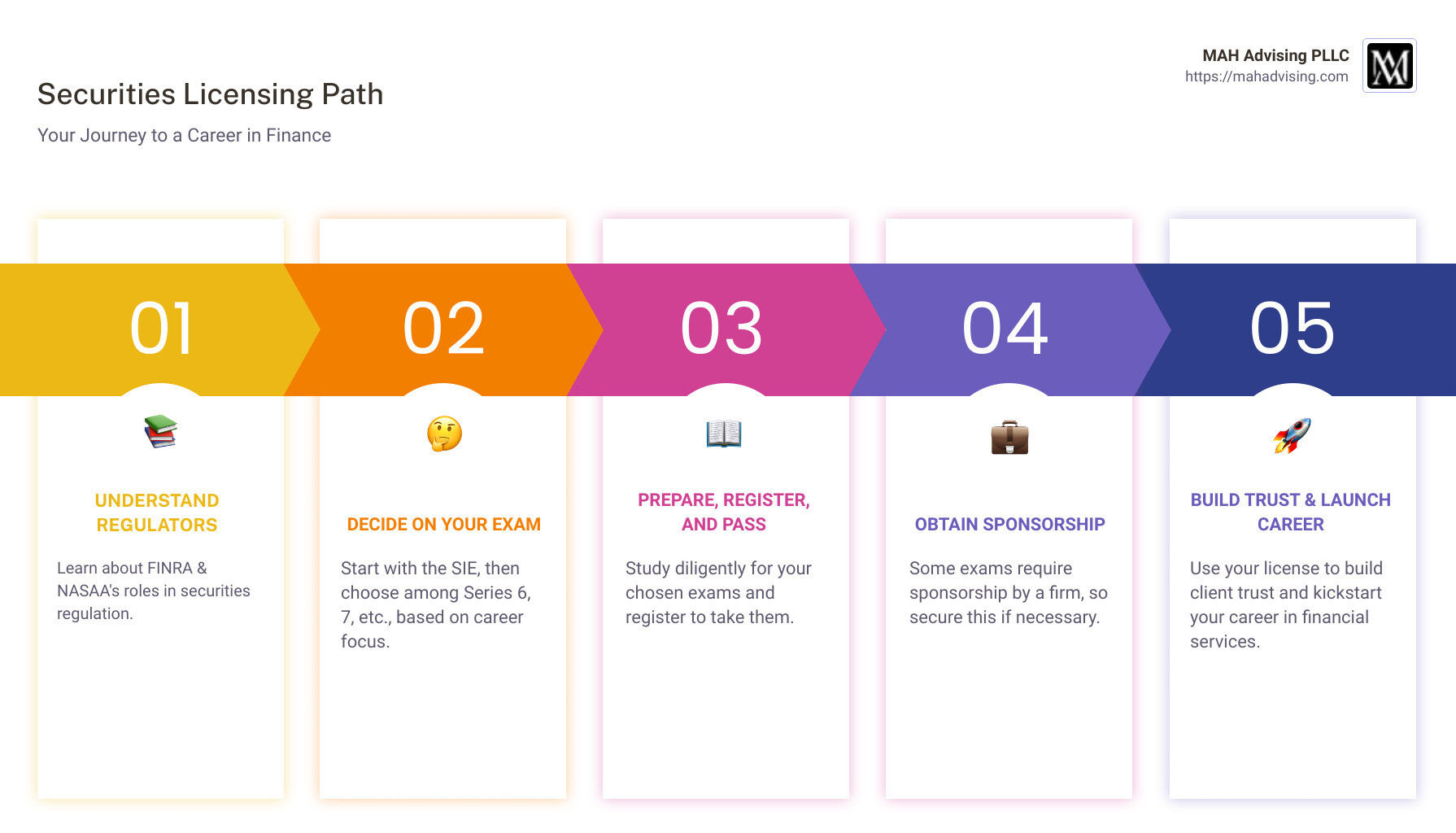
Obtaining your security license is not just a regulatory hoop to jump through; it’s a stepping stone to building trust with your clients and laying a strong foundation for your career in the financial industry. Let’s dive deeper into understanding what securities licensing entails and how you can navigate this journey.
Understanding Securities Licensing
When you’re starting out in the financial industry, one of the first things you’ll hear about is securities licensing. But what does it really mean, and why is it so important?
FINRA and NASAA: The Gatekeepers
At the heart of securities licensing in the United States are two key organizations: FINRA (Financial Industry Regulatory Authority) and NASAA (North American Securities Administrators Association). Think of FINRA as the national overseer for brokers and brokerage firms, while NASAA focuses on the state level, especially for investment advisors.
- FINRA is like the big boss of securities licensing. They handle the big exams like the Series 6 and Series 7, which allow you to sell a wide range of investment products.
- NASAA, on the other hand, deals with licenses like the Series 63, 65, and 66. These are more about giving you the green light to offer financial advice or sell securities on a state level.
Series Exams: Your Path to the Financial World
The Series exams are the bread and butter of securities licensing. Each exam focuses on a different area of the financial industry:
– Series 6 and Series 7 are about selling investment products.
– Series 63 is about understanding state securities laws.
– Series 65 and Series 66 focus on offering financial advice.
Passing these exams shows that you know your stuff when it comes to investments, laws, and ethical practices in the financial world.
The SIE Exam: The First Step
Before you dive into the Series exams, there’s the Securities Industry Essentials (SIE) Exam. Think of the SIE as your entry ticket into securities licensing. It covers the basics of the securities industry, and you don’t need a firm to sponsor you to take it. It’s your first step on the ladder, showing that you have the foundational knowledge needed in the financial industry.
- The SIE Exam is a bit like the general education requirements before you pick your major in college. It ensures everyone has a solid grounding before specializing.
Why Securities Licensing Matters
Securities licensing isn’t just about jumping through regulatory hoops. It’s about building trust with your clients and proving that you have the knowledge and ethical grounding to manage their investments wisely. It’s your key to a career in the financial industry, opening doors to roles like stockbroker, financial planner, or investment advisor.
In a nutshell, understanding securities licensing is about knowing the rules of the game in the financial industry. With organizations like FINRA and NASAA setting the standards, and the Series and SIE exams proving your knowledge, you’re well on your way to a successful career in finance.
Now that we’ve laid the groundwork, let’s explore the different types of securities licenses you can obtain and what career opportunities they can unlock for you.
Types of Securities Licenses
Entering finance and securities means navigating through a variety of licenses. Each license serves a unique purpose, allowing you to specialize in different areas of the financial industry. Let’s break down the common types of securities licenses: Series 6, Series 7, Series 63, Series 65, and Series 66.
Series 6 License
The Series 6 License is your gateway to selling mutual funds, variable annuities, and insurance products. If you’re aiming to work as an insurance agent or focus on investment products that include mutual funds and annuities, this license is essential. It requires passing the FINRA Series 6 exam, which covers topics like product knowledge, regulations, and ethical guidelines.
Series 7 License
For a broader scope in the securities world, the Series 7 License is the key. This license allows you to sell a wide range of securities products, including stocks, bonds, options, and ETFs. It’s the go-to license for stockbrokers and financial advisors who want the flexibility to offer clients a comprehensive portfolio of investment options. Achieving this license means passing the Series 7 exam, a more comprehensive test that demands a deep understanding of market mechanics, investment risk, and regulations.
Series 63 License
The Series 63 License, also known as the Uniform Securities Agent license, is all about state laws. It’s required in most states for individuals who buy or sell securities. This license complements your Series 6 or Series 7 license, ensuring you’re familiar with the specific legal requirements and regulations of the states where you’ll be doing business.
Series 65 License
If providing financial advice on a non-commission basis is your goal, the Series 65 License is a must. This license is tailored for financial planners, advisors, and consultants who charge an hourly fee for their services rather than earning commission on products sold. The Series 65 exam covers topics like ethics, investment strategies, and portfolio management principles.
Series 66 License
Lastly, the Series 66 License combines the Series 63 and Series 65 licenses into one comprehensive exam. It’s designed for financial advisors and transaction coordinators who already hold the Series 7 license. This license streamlines the process, allowing you to offer both investment advice and facilitate transactions without needing separate Series 63 and 65 licenses.
Each of these licenses unlocks different doors in the financial services industry, from selling specific investment products to offering personalized financial advice. Whether you’re drawn to the broad capabilities of the Series 7 license or the focused approach of the Series 65, obtaining the right securities license is a crucial step in building a successful career in finance.
With the landscape of securities licensing clarified, let’s delve into what career opportunities these licenses can open up for you, and how they can contribute to your professional growth in the financial industry.
Steps to Obtain a Securities License
Embarking on a career in the financial industry can be exciting and rewarding. To get started, you’ll need to navigate the path to obtaining a securities license. This step is crucial for anyone looking to sell securities, offer investment advice, or represent clients in the securities market. Here’s a simple guide to help you through this process.
Degree Requirements
First things first, while a specific degree might not be mandatory for all securities licenses, having a background in finance, business, or a related field can be a significant advantage. A bachelor’s or master’s degree can provide you with a solid foundation of knowledge that will be beneficial as you prepare for the licensing exams.
Sponsorship
Before you can take most securities licensing exams, you need a sponsor. This means you must be employed by or have an offer from a FINRA-registered firm or a firm that is a member of a self-regulatory organization. This requirement underscores the importance of securing a position in the industry as your first step towards getting licensed.
Study and Preparation
Passing the licensing exams requires thorough preparation. The exams cover a wide range of topics and can be challenging. Many candidates enroll in study courses, use online resources, or buy study guides to help them prepare. Consider creating a study plan that allocates dedicated study hours each week and stick to it. Practice exams are particularly useful in gauging your readiness and identifying areas where you need further study.
Exam Registration
Once you’re sponsored, you can register for the exam. For FINRA exams, this involves submitting a completed Form U4 through your sponsoring firm. For NASAA exams, if you’re not sponsored by a FINRA member firm, you can register directly on the FINRA website. You have a 120-day window to take the exam after registration, so plan accordingly.
State Requirements
In addition to the federal licensing exams, you may also need to comply with state-specific requirements. This could involve passing state law exams such as the Series 63, Series 65, or Series 66, depending on your career path and the states in which you plan to practice. Each state has its own set of rules and regulations, so research and understand these requirements well in advance.

Quick Tip: Start networking as early as possible. Attending industry seminars, joining finance-related groups, and connecting with professionals on LinkedIn can provide insights and advice that will be invaluable as you navigate the licensing process.
Obtaining a securities license is a significant milestone in your financial career. It not only demonstrates your commitment and knowledge to potential employers but also opens the door to numerous career opportunities. With careful planning, diligent study, and the right support, you can successfully navigate the licensing process and embark on a rewarding career in the financial industry.
As you move forward in your journey, each step you take brings you closer to your goal. Stay focused, stay motivated, and let’s gear up for the exciting career opportunities that await with a securities license.
Career Opportunities with a Securities License
Diving into finance with a securities license opens up a variety of career paths. Each role comes with its own set of responsibilities, challenges, and rewards. Let’s explore some of the key roles you can pursue:
Registered Representative
Think of a registered representative as the bridge between investors and the vast ocean of investment opportunities. With a Series 7 license, you’re authorized to sell almost all types of securities. This role is perfect for those who love building relationships and guiding clients through their investment journey. It’s all about understanding your client’s needs and finding the best financial instruments to meet those needs.
Stockbroker
The term “stockbroker” often brings to mind images of bustling trading floors and rapid-fire transactions. As a stockbroker, you’re in the thick of the action, buying and selling stocks on behalf of your clients. This role requires a Series 7 license and is suited for individuals who thrive in environments and are keen on market trends. Your goal is to maximize your clients’ investment returns while minimizing their risks.
Investment Advisor
If you’re passionate about crafting long-term investment strategies, becoming an investment advisor might be your calling. With a Series 65 license, or a Series 66 license if you also want to conduct sales, you can offer financial advice on a non-commission basis. This role is all about understanding the broader financial picture of your clients and advising them on how to achieve their financial goals through investments. It’s a role that requires not just financial acumen but also a deep sense of trust and responsibility towards your clients’ financial well-being.
Financial Planner
A financial planner goes beyond just investments, providing holistic advice on all aspects of personal finance, including budgeting, insurance, retirement planning, and tax strategies. To excel in this role, a comprehensive understanding of finance and a keen desire to help others achieve financial security are key. While a Series 7 or Series 65 license can be beneficial, certifications like CFP (Certified Financial Planner) are also highly regarded in this field.
A securities license is your ticket to a wide array of roles in the financial industry. Whether you’re executing trades as a stockbroker, developing investment strategies as an investment advisor, or offering comprehensive financial planning services, the opportunities are vast and varied.
As we transition into the next section, keep in mind that the journey to obtaining a securities license is not just about passing exams. It’s about opening doors to fulfilling careers that allow you to make a significant impact on people’s lives through financial guidance and expertise. Let’s now address some of the most frequently asked questions about securities licensing to further demystify this exciting field.
Frequently Asked Questions about Securities Licensing
When embarking on a career in the financial services industry, understanding the path to obtaining securities licensing is crucial. Here, we address some of the most common queries to help simplify the process for aspiring professionals.
What is the Securities Industry Essentials (SIE) Exam?
The Securities Industry Essentials (SIE) Exam is a critical first step for anyone looking to enter financial services. It’s designed to assess a candidate’s basic understanding of the securities industry, including topics like types of products, market structures, regulatory agencies, and ethical practices.
One of the best things about the SIE Exam is its accessibility. It’s open to anyone aged 18 or older, and you don’t need to be associated with a FINRA-member firm to take it. This makes it an excellent starting point for college students, career changers, or anyone interested in getting a taste of the securities industry.
The exam format consists of 75 multiple-choice questions, and you’ll have 1 hour and 45 minutes to complete it. A passing score is 70%, and the exam fee is $80. Passing the SIE Exam is just the beginning. It lays the foundation for further qualification exams necessary for specific roles within the industry.
Do you need a college degree to get a Series 7 license?
Interestingly, a college degree is not a requirement to obtain a Series 7 license. However, before you can take the Series 7 exam, you must be sponsored by a FINRA member firm. These firms often look for candidates who have a strong educational background or relevant work experience in the financial sector.
While not mandatory, a degree in finance, economics, or a related field can provide a solid foundation of knowledge and make you a more attractive candidate to potential sponsors. Regardless of your educational background, passing the Series 7 exam will require dedication to studying and a deep understanding of the securities industry.
What jobs can you get with a securities license?
Holding a securities license opens a wide array of career opportunities in the financial services industry. Your career path will largely depend on the type of license(s) you obtain. Here are a few roles that a securities license can qualify you for:
- Registered Representative: Also known as a stockbroker, you can buy and sell securities (e.g., stocks, bonds) on behalf of your clients.
- Investment Advisor: Provide advice to clients about investments, build investment portfolios, and help clients plan for their financial future.
- Financial Planner: Assist clients in managing their finances, including savings, investments, insurance, and tax strategies.
- Sales Agent for Financial Products: Depending on your license, you might sell mutual funds, variable annuities, and other financial products.
Each of these roles requires a specific type of securities license. For example, the Series 7 license is essential for registered representatives, while the Series 65 license is required for investment advisors who charge fees for their advice.
Securities licensing is not just a regulatory requirement; it’s a stepping stone to a rewarding career in the financial services industry. Whether you’re aspiring to become a financial planner, investment advisor, or stockbroker, obtaining the right securities license will set you on the path to success.
Conclusion
In financial services, securities licensing is more than a mere formality—it’s a gateway to career advancement and increased compensation. Let’s break it down in simple terms.
Career Advancement
With the right securities license, the doors to various prestigious roles in the industry swing wide open. You’re not just a candidate; you become the candidate that firms are eager to onboard. From being a registered representative to a sought-after investment advisor, the trajectory of your career can see a significant uptick. It’s like holding a key to a treasure chest where the treasures are endless opportunities.
Increased Compensation
Here’s a straightforward truth: expertise pays. And in the financial services industry, your expertise is validated by the securities licenses you hold. With each license, you demonstrate a deeper understanding of financial products, regulations, and ethical practices. This not only positions you as a valuable asset to your firm but also puts you in a spot where you can negotiate for higher compensation. It’s simple economics—supply and demand. The supply of licensed professionals in specialized areas isn’t as high as you’d think, making your demand, and thus your value, higher.
MAH Advising PLLC
At MAH Advising PLLC, we understand the intricacies of securities licensing and the profound impact it can have on your career. Our expertise in FINRA compliance and broker-dealer compliance positions us as your ideal partner in navigating the complex landscape of securities licensing. Whether you’re just starting out or looking to expand your licenses, we’re here to guide you through the process—ensuring you’re well-prepared to seize the opportunities that lie ahead.
In conclusion, obtaining a securities license is not just about fulfilling a regulatory requirement; it’s about unlocking your full potential in the financial services industry. It’s about setting yourself apart in a competitive field, enhancing your career prospects, and securing a future with increased compensation. At MAH Advising PLLC, we’re committed to helping you achieve these goals. Let’s embark on this journey together, towards a future where your expertise is recognized, rewarded, and revered.
The path to success in the financial industry is paved with knowledge, expertise, and the right partnerships. Let us be your guide.